

Recently, the teachers of CAMS & PUMC have published in Matter (a sister issue of Cell, Zone 1 TOP of CAS), an important journal in the field of materials. If = 17.5) published a research paper entitled Ultrahigh through-plane thermal conductivity of graphite by reducing inter-plane twist, Professor Gu Xiaokun, Professor Sun Bo of the Shenzhen International Graduate School of Tsinghua University, and Professor Tian Xuezeng of Sun Yat-sen University are co-corresponding authors of the paper.
Research Background
Graphite is an important engineering material, and its crystal has a layered structure, so its physical properties show strong anisotropy. Due to its excellent in-plane thermal conductivity (thermal conductivity about 2000 W / mK), it is widely used for heat dissipation of electronic devices, while its ability to conduct heat between the planes (normal) has long been neglected (thermal conductivity about 5-7 W / mK). Therefore, when graphite is used as a heat dissipating material, it usually plays the role of in-plane temperature equalization, and cannot effectively dissipate heat in the vertical direction. This bottleneck severely limits the potential of graphite in the field of heat dissipation. Is it possible to improve the thermal conductivity of graphite as low as previously thought?
Research content
In this work, the research team has challenged long-standing views through femtosecond laser thermal conductance testing, high-resolution structural characterization and high-precision cross-scale phonon transport modeling. The thermal measurement results show that the thermal conductivity of high quality high oriented pyrolytic graphite (hopg) is as high as 13.4 w / mk, In that high directional pyrolytic graphite, there exist helical stacking fault which strongly scatter TA phonons and effectively suppress the interplanar heat conduction. The interplanar thermal conductivity of single crystal graphite samples can be further improved by reducing the helical stacking fault. The research highlights are as follows:
1. laser thermal reflection measurement
The team of Prof. Bo Sun used laser thermal reflection (TDTR) to achieve bidirectional measurement of the thermal conductivity of highly oriented pyrolytic graphite (HOPG). In this study, conventional TDTR and offset spot TDTR are combined to measure the in-plane and cross-plane thermal conductivities separately under the condition of keeping the same spot size and modulation frequency. Figure 1 shows the thermal conductivities of three different grades of HOPG samples in the 100-C600 K range, with the highest interplanar thermal conductivities reaching twice the previously reported values, refreshing the knowledge of the thermal conductivity properties of graphite.
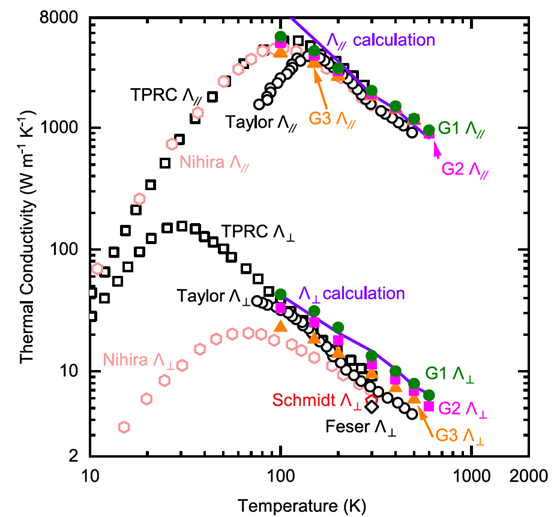
Figure 1.HOPG thermal conductivity as a function of temperature.
2. high-resolution structural characterization
The team of Prof. Xuezeng Tian used advanced transmission electron microscopy to reveal the hidden torsional structure inside highly oriented pyrolytic graphite. Although HOPG is regarded as a highly ordered material, experiments have found that its grains have a tiny twist angle (5 ° � C13 °) in the direction perpendicular to the face, resulting in a unique twist homostructure. This structure introduces additional phonon scattering in the cross-plane direction, which significantly affects the heat transfer performance. More critically, the density of the twisted interface in the high-grade sample (G1) is significantly lower than that in the low-grade sample (G3), which directly explains the difference in cross-plane thermal conductivity of different grades of HOPG.
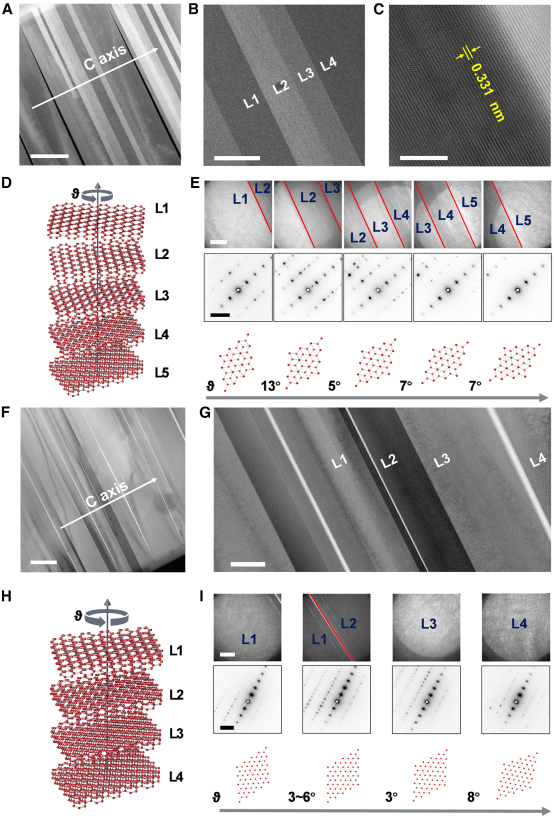
Fig. 2. spiral Staggered Fault Structure in HOPG.
3. phonon transport analysis
In the past theoretical research, Prof. Gu's team adopted the independently proposed phonon scattering sampling method and developed phonon scattering rate and thermal conductivity calculation software suitable for GPU hardware, GPU _ PBTE, In combination with the latest van der Waals density functional method, the transport properties and thermal conductivity of single crystals of graphite were predicted and it was found that the interplanar thermal conductivity can significantly exceed 10 W / mK (see reference). In this project, the research team further improved the first-principle calculation, and fully considered the effects of thermal expansion effect, phonon renormalization effect, four-phonon scattering and other effects on the heat conduction of graphite. The results show that the interplanar thermal conductivity of single crystal graphite is 14.6 W / mK. This value is a little higher than that of G1 sample, which perfectly verifies the thermal conductivity between the ultrahigh surfaces of graphite. The research team further revealed the important influence of the twist angle between the graphite crystallites in the HOPG sample on the graphite heat conduction through molecular dynamics simulations. By establishing a simplified one-dimensional atomic chain model, it is shown that the twisted interface causes a great weakening of the interlaminar shear force and directly restrains the low-frequency transverse phonon transport, It is almost completely unable to propagate across interfaces below 1 THz. This means that the twisted interface inside the graphite is a key factor in the reduction of the cross-plane thermal conductivity. Based on the experimental data, the interplanar thermal conductivity of graphite single crystal is further predicted by a simple series thermal resistance model, which is in good agreement with the first principle calculation. The findings not only explain the differences in thermal conductivity of different grades of HOPG, but also provide a new physical picture for the regulation of thermal transport in layered materials.
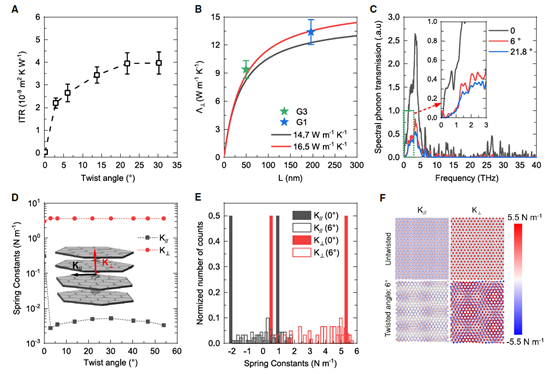
Fig. 3. phonon transport at the interface of helical stacking fault.
Significance of Research
This work not only deepens the understanding of the nature of heat transfer of graphite and layered materials, but also provides a feasible way for the engineering of thermal properties through the design of interface structure. This discovery has important theoretical value and potential application significance for the thermal management of integrated circuits, power devices, and the development of thermal functional materials.